
Mingus and Hieronymous
The Robot Who Looked Like MeThis relationship thread follows two Gleisters as political opponents, reluctant interpreters of one another, and participants in the same repeating history.
increasing Bearing strength in each event
 decreasing
Bearing strength in each eventdecreasingAn Encounter with the Emperor
Recognition at the Park
A familiar stranger
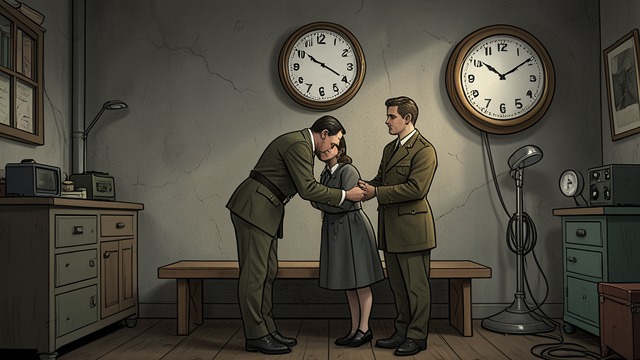
Mingus approaches Charlie on a park bench and reveals that he is the Emperor. Their resemblance makes the encounter both political and intimate: the enemy is another version of the self.
A narrow escape
Mingus demands Charlie’s box, and Charlie escapes only when a time image distracts the ruler. The encounter establishes distrust between the two versions of Gleister.
The Resistance Accusation

A Double Recognizes Another
Hieronymous identifies Mordecai
Hieronymous recognizes the bearded speaker as the man he met in the future and warns the meeting that he is Mingus. The recognition converts abstract suspicion into personal confrontation.
The ruler reveals himself
Mordecai takes control of the assembly at gunpoint. The Gleisters’ shared identity offers no easy basis for trust when their experiences have divided them into opposing political selves.
An Argument About Power
Brothers in Political Conflict
The emperor’s appeal
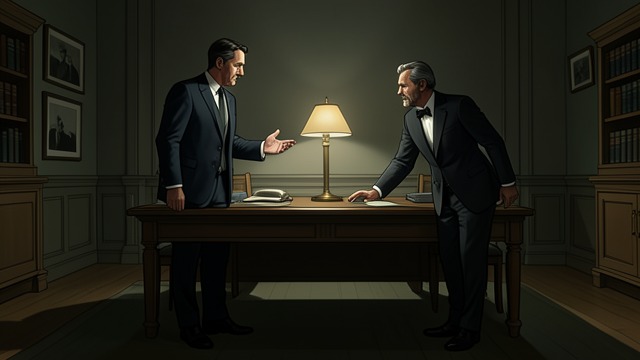
Mingus asks his counterparts to understand the violent conditions that shaped his rule. He claims that security and education were necessary before political freedom could work.
Hieronymous’s challenge
Hieronymous argues that imposing an old political solution on a future society resembles colonization. Their dispute is a conflict between a ruler’s responsibility as he understands it and a critic’s refusal to excuse domination.
The New Emperor’s Request
An Uneasy Transfer
A role accepted
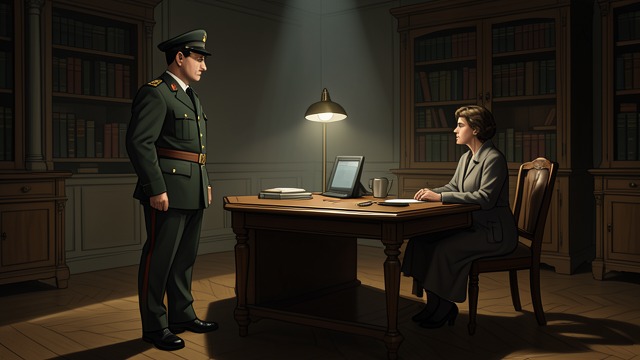
Egon renames himself Mingus after the previous emperor dies. Hieronymous urges him to take the role, trusting the sequence’s apparent necessity.
Permission to depart
Hieronymous asks the new emperor to leave the others alone, and Egon agrees despite expecting complications. The exchange resembles a family negotiation conducted through the language of imperial power.
The Final Farewell
A Shared Burden
The old emperor’s explanation
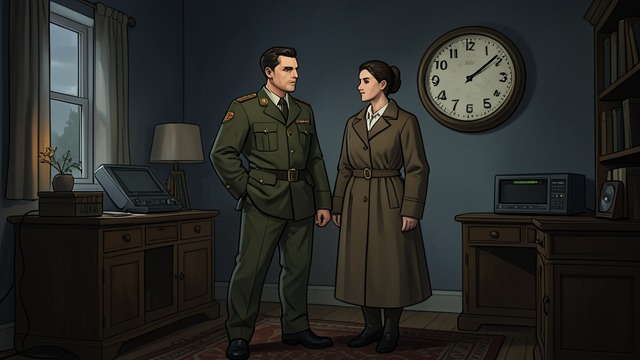
Mingus tells Hieronymous that countless Gleisters continue to arrive and that the Empire is running out of resources. He admits that his authority cannot control the multiplying sequence.
A final act of trust
Mingus hands Hieronymous the laser gun when he decides to return to the past. Their relationship has moved from confrontation toward cooperation, even though neither can guarantee the outcome.
During Charlie’s first visit to the future
At the Gleister assembly
After Mingus explains his empire
After Egon takes the imperial weapon
At the imperial audience room near the end
